A Gem of a Pattern: Diamond Matching with Wood Veneer
Updated for today’s design practices and applications, while preserving a time-tested, craftsman-level technique.
Wood veneer has long been celebrated for its natural beauty and versatility in interior design. Among the many techniques for arranging veneer, diamond matching and reverse diamond matching stand out for their geometric elegance and dramatic visual impact. While the core craft remains unchanged, designers today are applying these patterns to modern feature walls, custom furniture, and hospitality spaces for a refined focal point.
Wood Veneer Matching: Diamonds in the Rough!
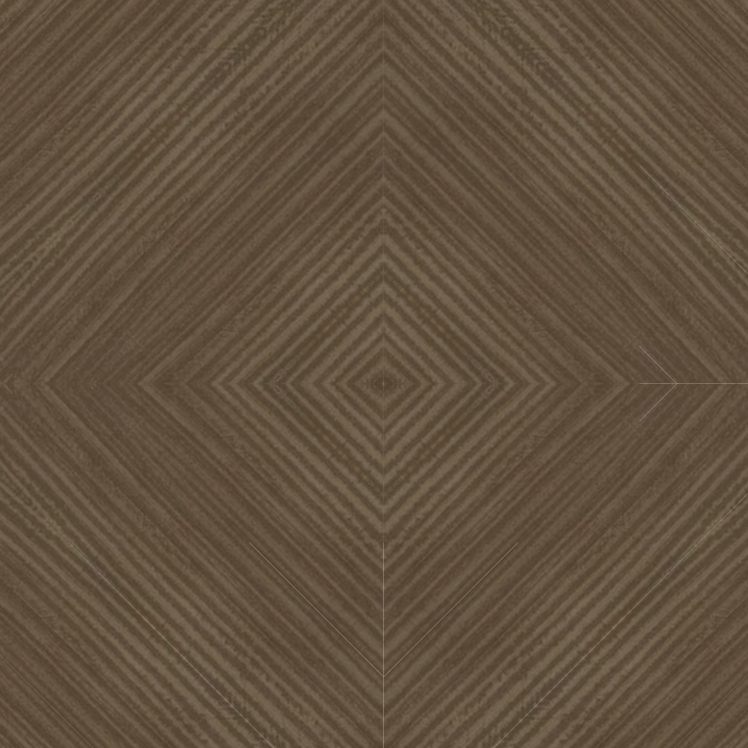
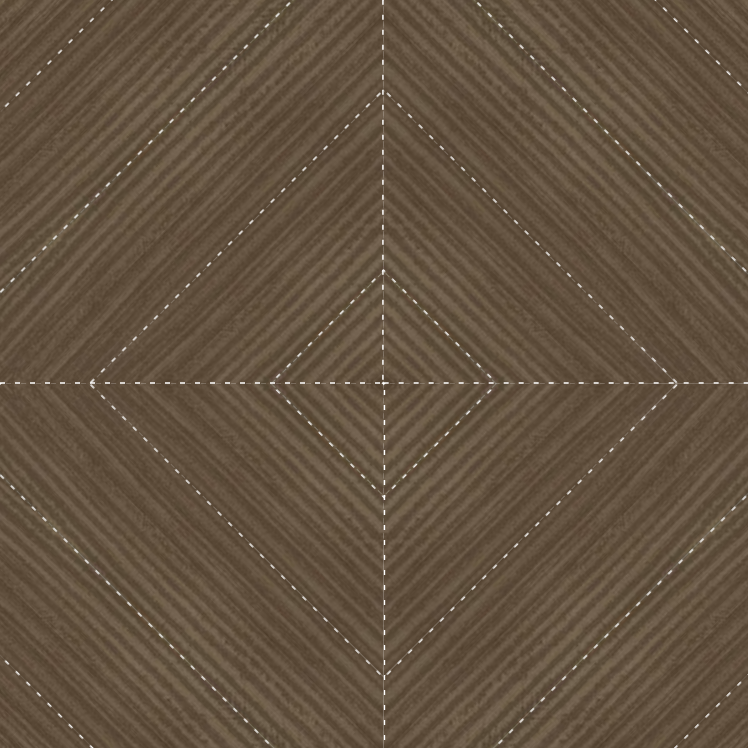
Diamond matching is a variation of four-way (quarter-way) matching that works best with straight-grained, striped veneers without swirls or burls. Sheets are sliced on an angle and quarter-matched to produce a central diamond figure.
Step-by-Step: How to Create a Diamond Match
- Place four consecutive veneer leaves side by side; cut both ends at a 45° angle so the cuts are parallel.
- Open the top pair like a book, rotate through the top diagonal to form an inverted “V,” and tape the joint.
- Make a straight cut from corner to corner; fit the triangular piece into the lower “V” to create a rectangle.
- Repeat with the second pair in reverse for a face match, then join the two rectangles at the center.
Result: Four equal pieces cut diagonally to the straight grain join to form a clean, symmetrical diamond at the panel’s center.
Reverse Diamond Matching: The Opposite Effect
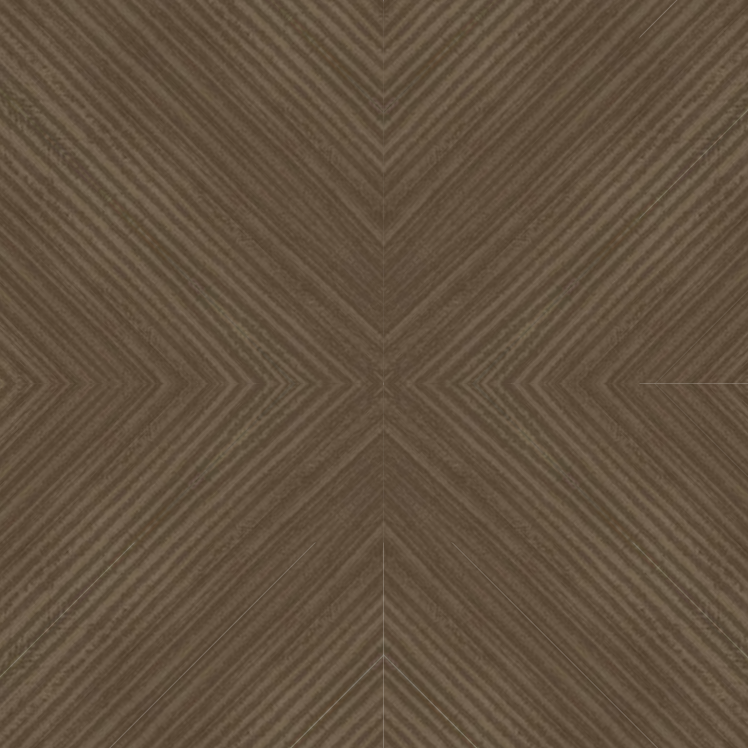
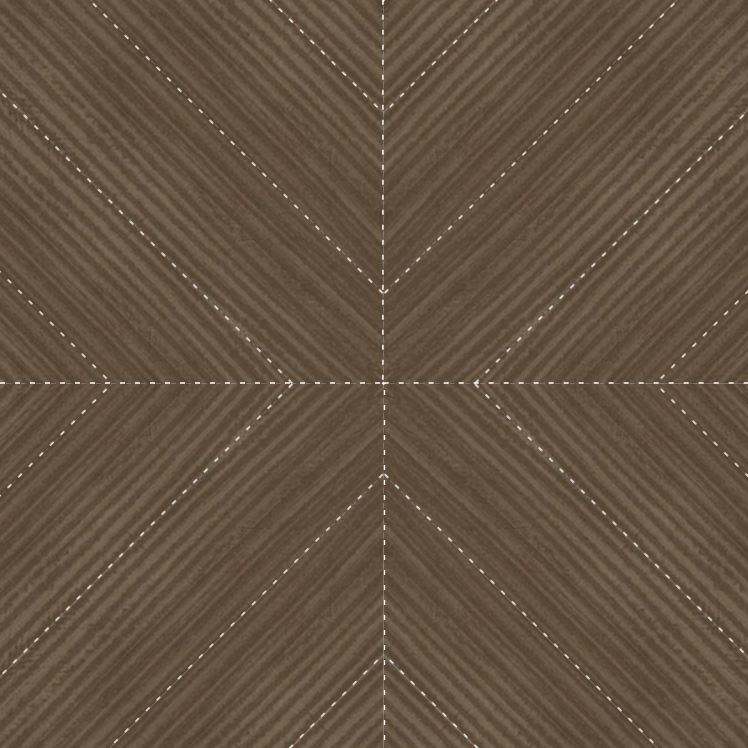
Reverse diamond matching (also called a “butterfly match”) uses the same principles but orients the grain toward the center to create an X-shaped figure. The grain points toward the outer corners rather than inward, delivering a bold, dynamic symmetry.
Where These Patterns Shine Today
- Feature walls & lobbies: The geometry adds depth and a gallery-like focal point.
- Custom furniture: Dining and conference tables, headboards, and door faces showcase the center figure.
- Hospitality & workplace: Consistent, repeatable patterns help unify brand aesthetics across spaces.
- Sustainable specification: Veneers use a fraction of the hardwood required for solid lumber, conserving material while delivering a premium look.
Best results come from straight-grained species with even striping—think European White Oak, American Walnut, Maple, and other linear-grain options suited to precise matching.
Choosing Diamond vs. Reverse Diamond
Pick diamond matching when you want a centralized focal element that anchors a panel. Choose reverse diamond when you prefer an X- or butterfly motif that radiates movement across the surface. Both approaches highlight wood’s natural rhythm within an architectural framework, so the decision ultimately depends on the mood and balance you want to achieve in the space.