
Please sign in to view pricing and place orders online.
Wood Veneer Glossary & Reference Guide
Wood Veneer Cuts: An Illustrated Guide
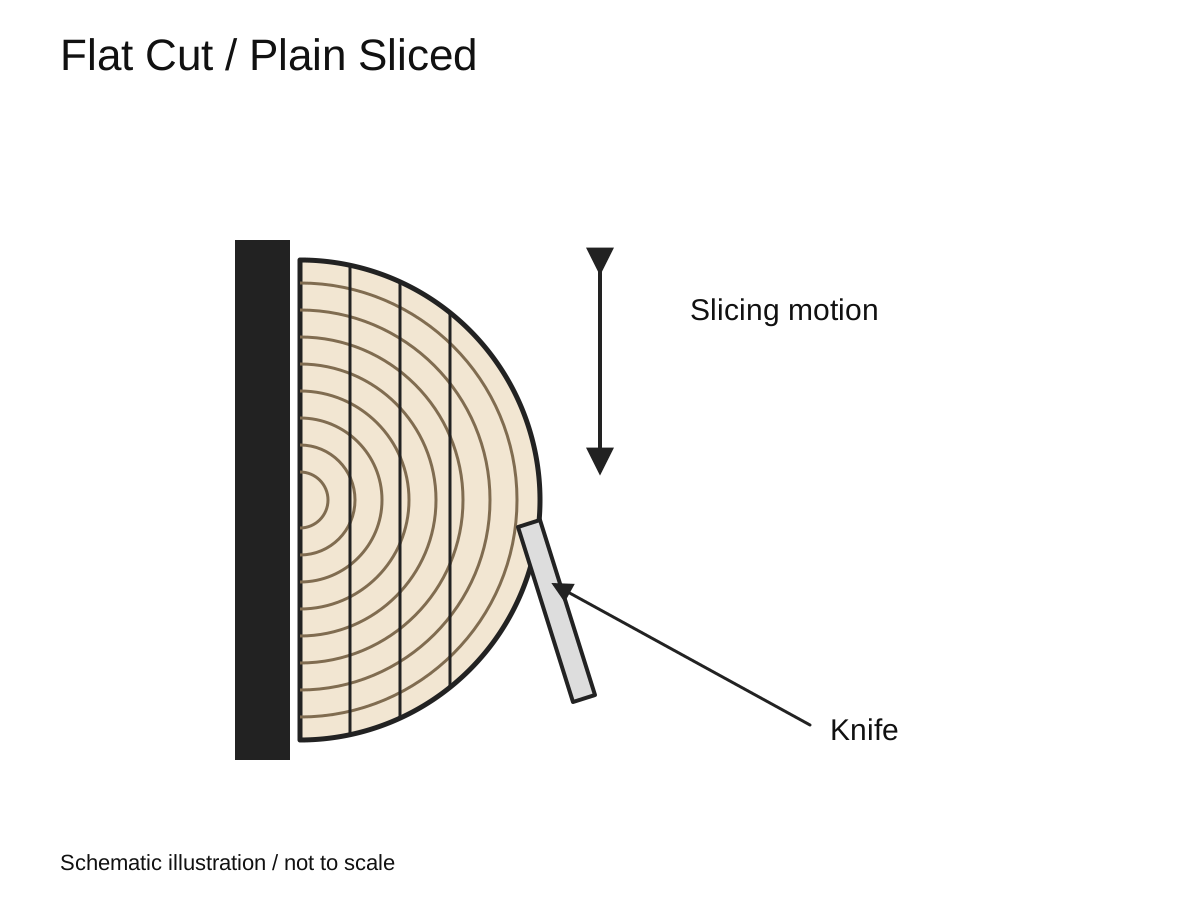
Flat Cut or Plain Sliced - (defined by a cathedral or heart)
Half a log is mounted on a large steel rack which moves up and down through a stationary knife through a series of vertical, parallel cuts. This produces consecutive leaves of veneer with the standard appearance of veneer (the "cathedral" or flame-shaped arch). When a log is flat cut it will generate flat cut bundles. As you get to the center of the log, normally the rest of the flitch is split open to produce a quartered look called flat cut quarters.
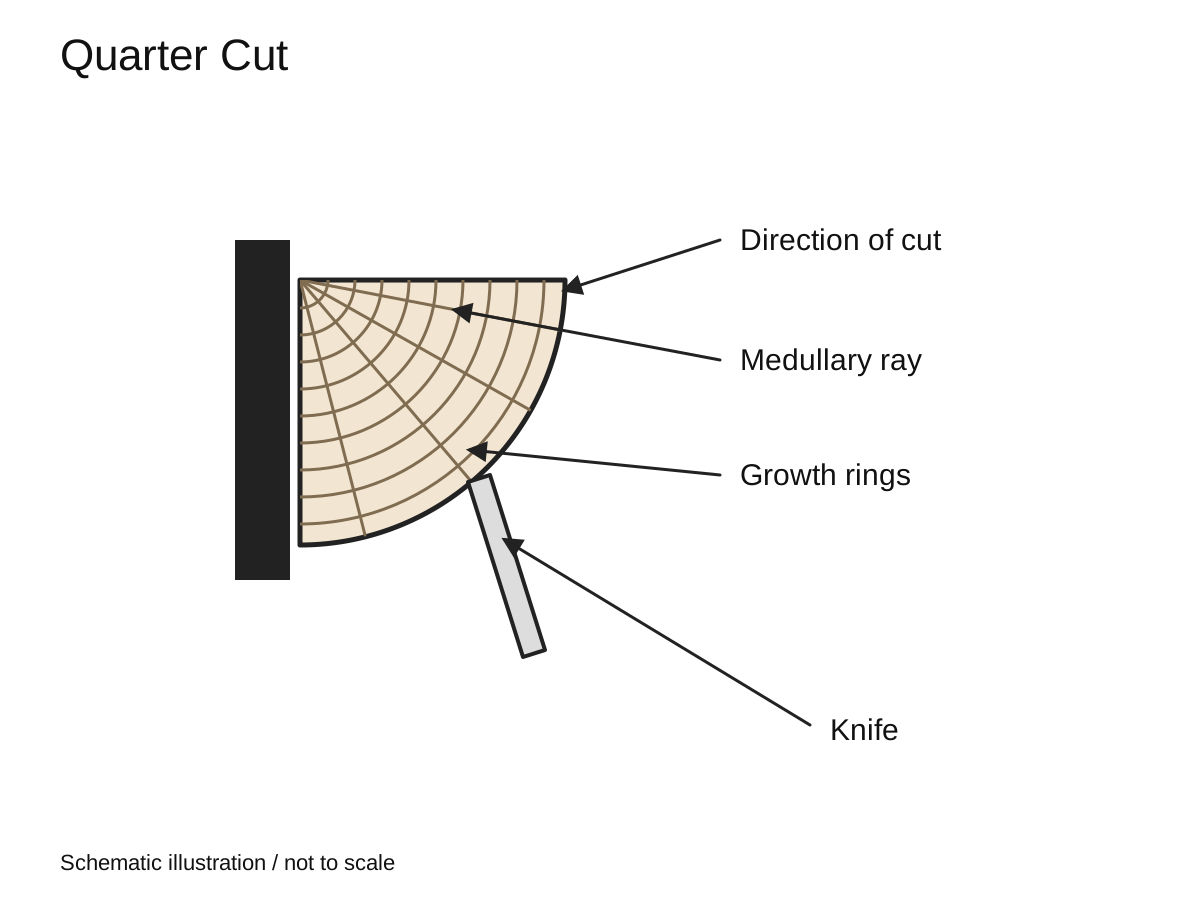
Quarter Cut - (straight grain or ribbon-striped appearance)
A quarter of the log is mounted off center so that the growth rings strike the knife at a right angle. The edge of the annual rings create the lineal figure of the veneer. Quartered leaves cut consecutively are narrower than plain sliced and typically contain straighter grain. Some flake is produced when cutting through the medullary rays, especially in Oak.
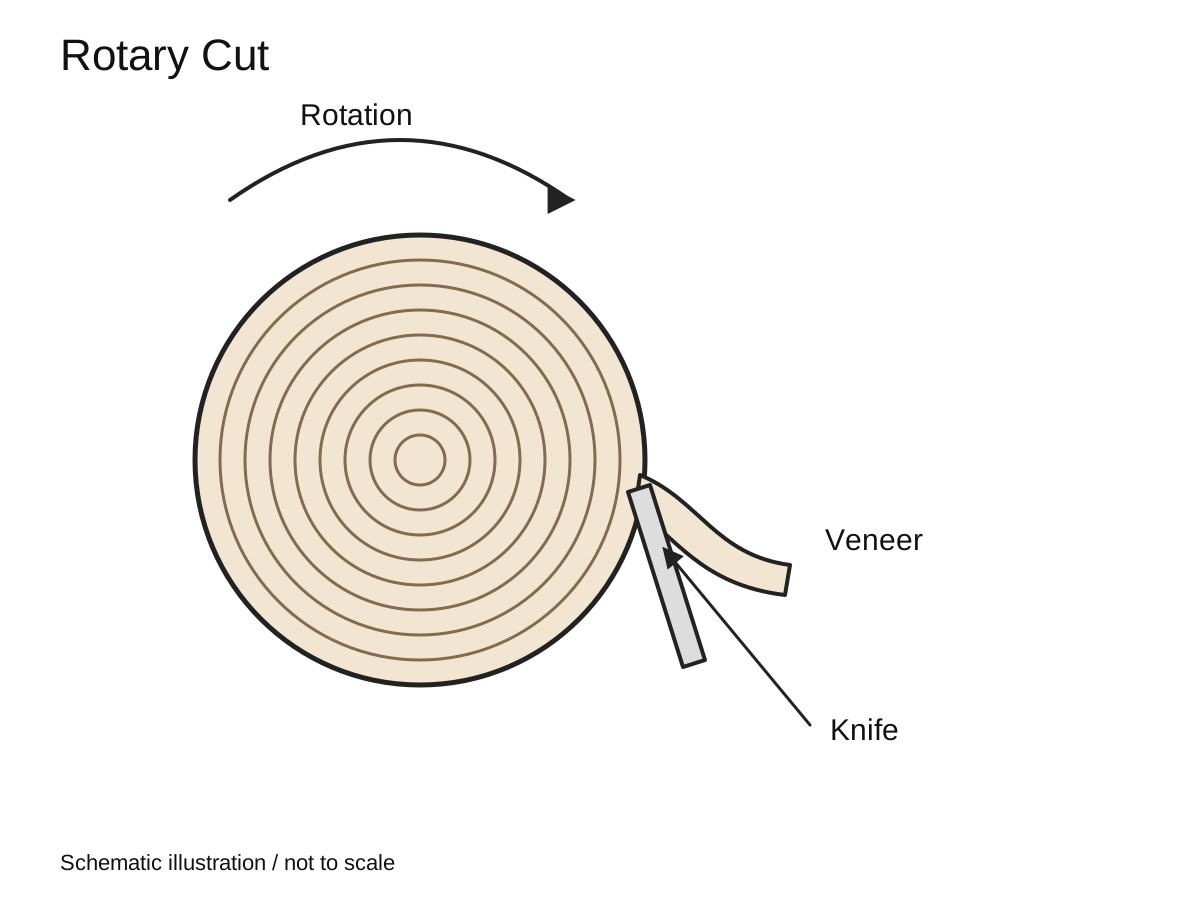
Rotary Cut - (creates a bold sometimes wild, variated grain)
An entire log is mounted so that the log turns on its long axis. While spinning, the knife advances toward the center of the log slicing or peeling a continuous sheet of veneer. Sometimes a score line is cut into the log to give the effect of consecutive sheets. This is especially true of burls and Bird's Eye Maple.
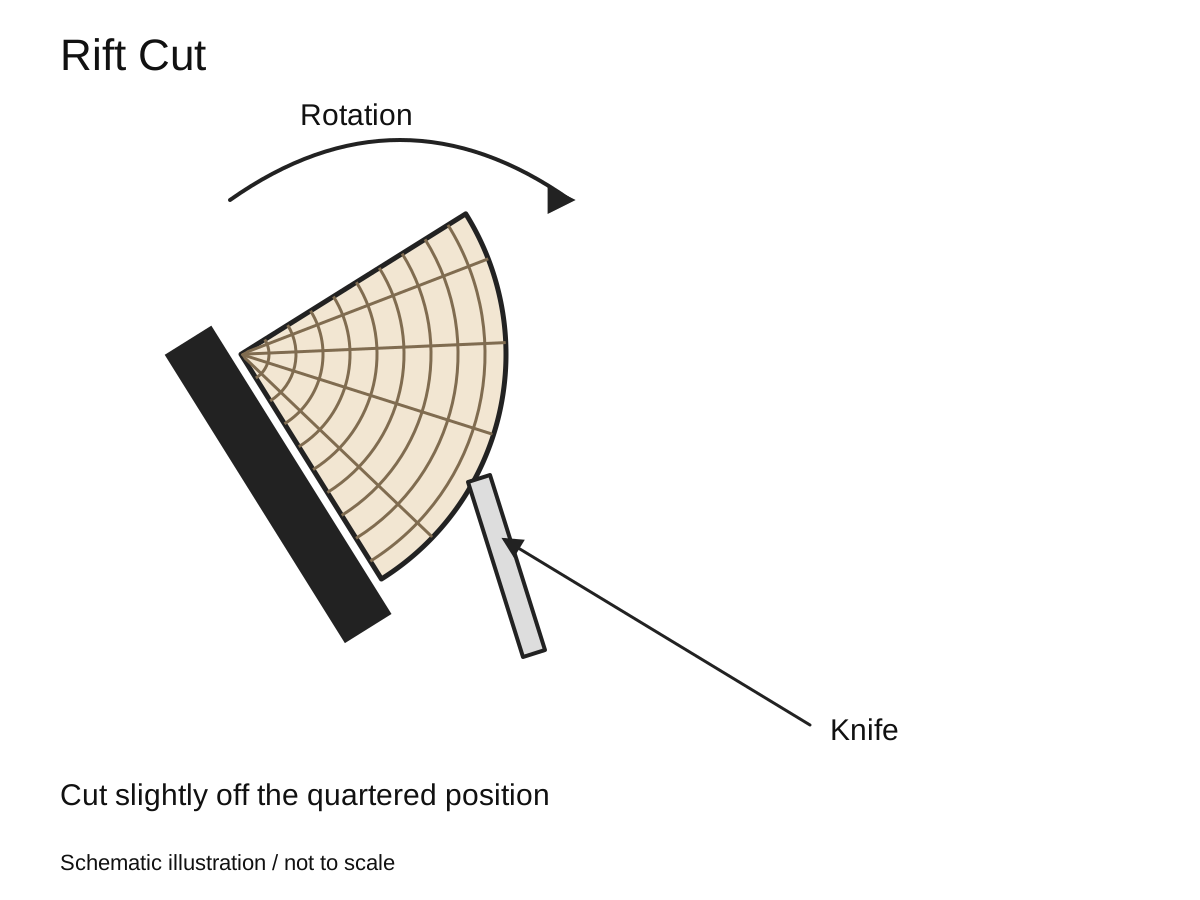
Rift Cut - (a straight grain effect similar to true quarter cut veneer)
Used in Oak to minimize the "flake" effect, the cant is cut at an angle of 15 degrees off the quartered position.
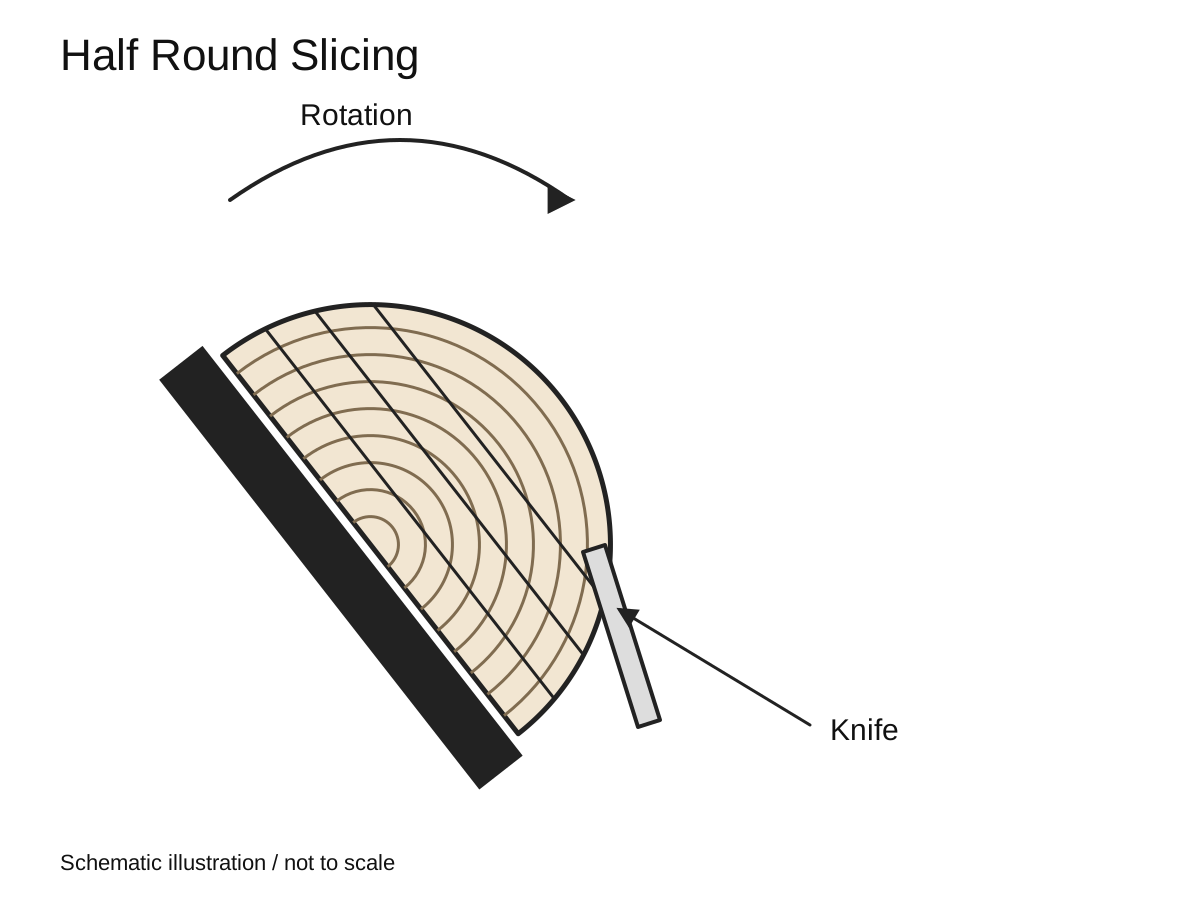
Half Round Slicing - (modified characteristics of both rotary and flat cut veneers)
A half of a log is mounted so that it will cause the blade to cut slightly across the growth rings. This is primarily used to accentuate the grain in various woods such as in burls or Bird's Eye Maple, or to gain a wider width on a cathedral on small dimension logs.